
On watching cartoons and assuming competence
Today was a first for both of us.
After almost a year of living together and over two decades of being sisters,
we watched TV together for the first time.
In 22 years, it was the first time we actually “hung out”: a late night spent with our feet up, snacking on some ice cream after ordering a pizza, watching a new show that just came out on Netflix. Something that's pretty normal for most siblings, but completely unheard of for us.
Sure, I take her to do fun things as often as I can, ever since I was old enough to drive her around. But doing something together has always been An Occasion, not a part of our routine - something carefully thought out, purposefully and carefully selected, usually with at least one back up plan. The things we do together we usually do for her, as I was always told that she just didn’t like the things I did. My parents would explain that she just wasn’t capable of doing a lot of things, and when I tried to bond with her, it never seemed to work right.
I would spend weeks brainstorming ideas for outings or gifts she might enjoy for her birthday, Christmas, Easter. Our parents joked year after year that I was always the only one that knew what to get her for holidays, and I didn’t want to point out that I was the only one who got her anything other than toothpaste or new pajamas, and even then I was still way off. I would try dolls, stuffed animals, fidget toys, kinetic sand, thinking putty - she would never use them. As she got older, everyone started just getting her Barbies, but after they were stripped of their shoes and accessories and organized by size and color, they were never touched again. What I didn’t consider until adulthood was that toys mean nothing when there is no one who understands how to play with you, no one who will take the time to try.
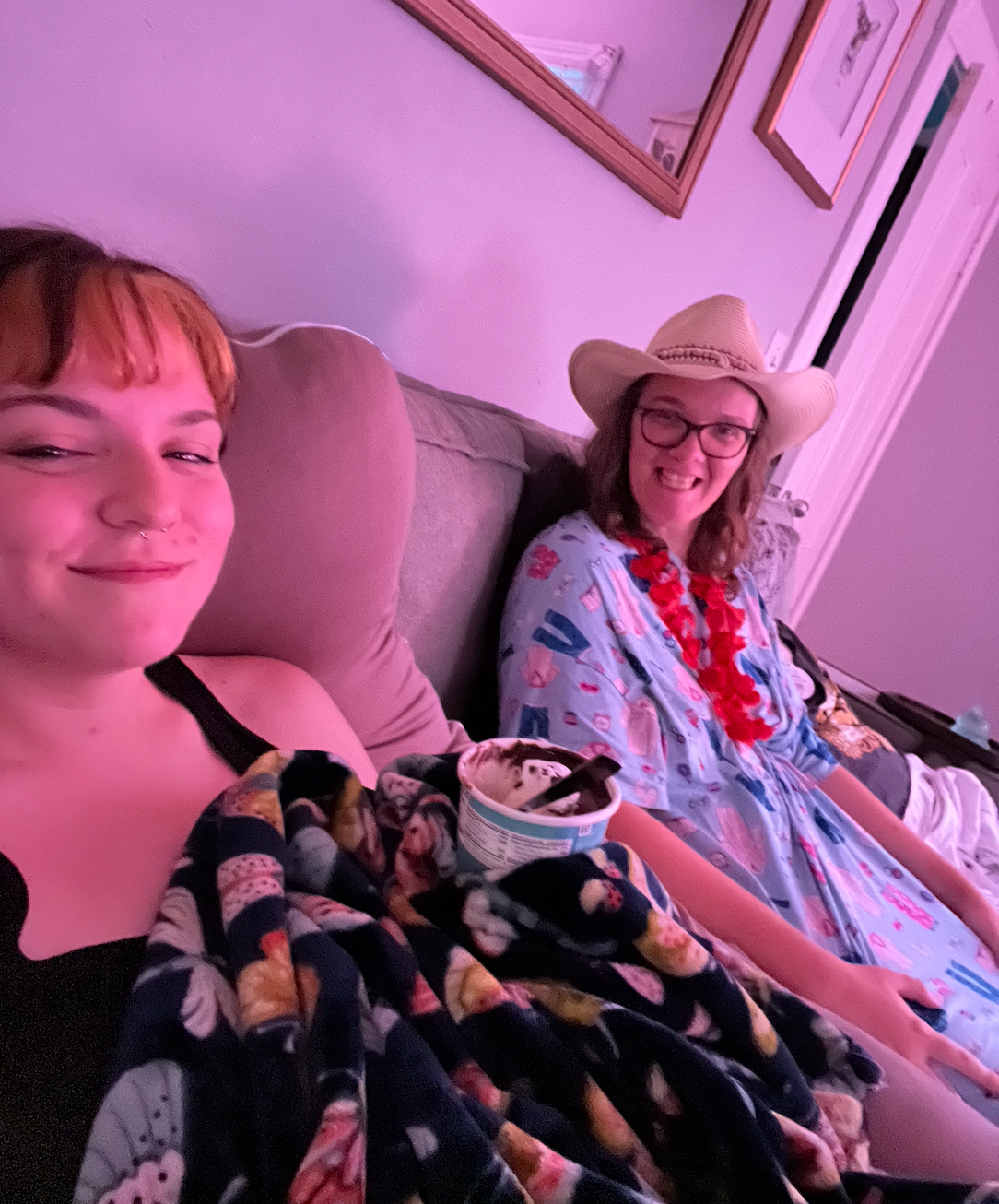
But now, at almost 23 and 28, here we are, just two sisters hanging out on the couch in an apartment we share, staving away the Sunday scaries with snacks and a new show. She has a huge grin on her face and can’t stop giggling in excitement. She reacts to the storyline, laughs at the right moments, asks me about the words in the subtitles that she doesn't understand. I take a photo of us to capture the memory, and she asks me (in so many words) to send it to her. I text it to her, and she immediately responds (even though she’s sitting right next to me, we’re still practicing our texting skills), telling me how excited she is to do this with me.
The normalcy of it all is suddenly everything I had always hoped for but understood I may never get, and seeing my own shocked excitement reflecting off my sister’s face is a feeling I don’t know if I’ll ever be able to explain.
And if she doesn’t want to watch TV with me, that is always fine - God knows I need time to spend on my own, too. Even today, after exactly two episodes, she suddenly and urgently announced that she was going back to her bedroom (and then proceeded to text me another 8 times from across the apartment). There are going to be times where she’s just overstimulated, or needs to do something to relax on her own, and she’s always welcome to have that space.
But it’s becoming more obvious with each day that passes that the things we don’t have in common aren’t usually because of her disability, but rather just normal differences between people.
Turns out, my sister likes action movies, and rollercoasters, and sports. I like indie movies, driving only 5 miles over the speed limit, and know nothing about anything ending in -ball. I love a rainy day curled up inside with a book and a big blanket, while she loves a blue-skied summer day at the beach. She loves the color red, and she hates having her nails painted. She likes keeping her hair short, even if I would be thrilled to be able to braid and curl her gorgeous, natural honey highlights. She’s hinted at wanting to color it, and nags me to help her call the hair salon so we can get it cut again soon.
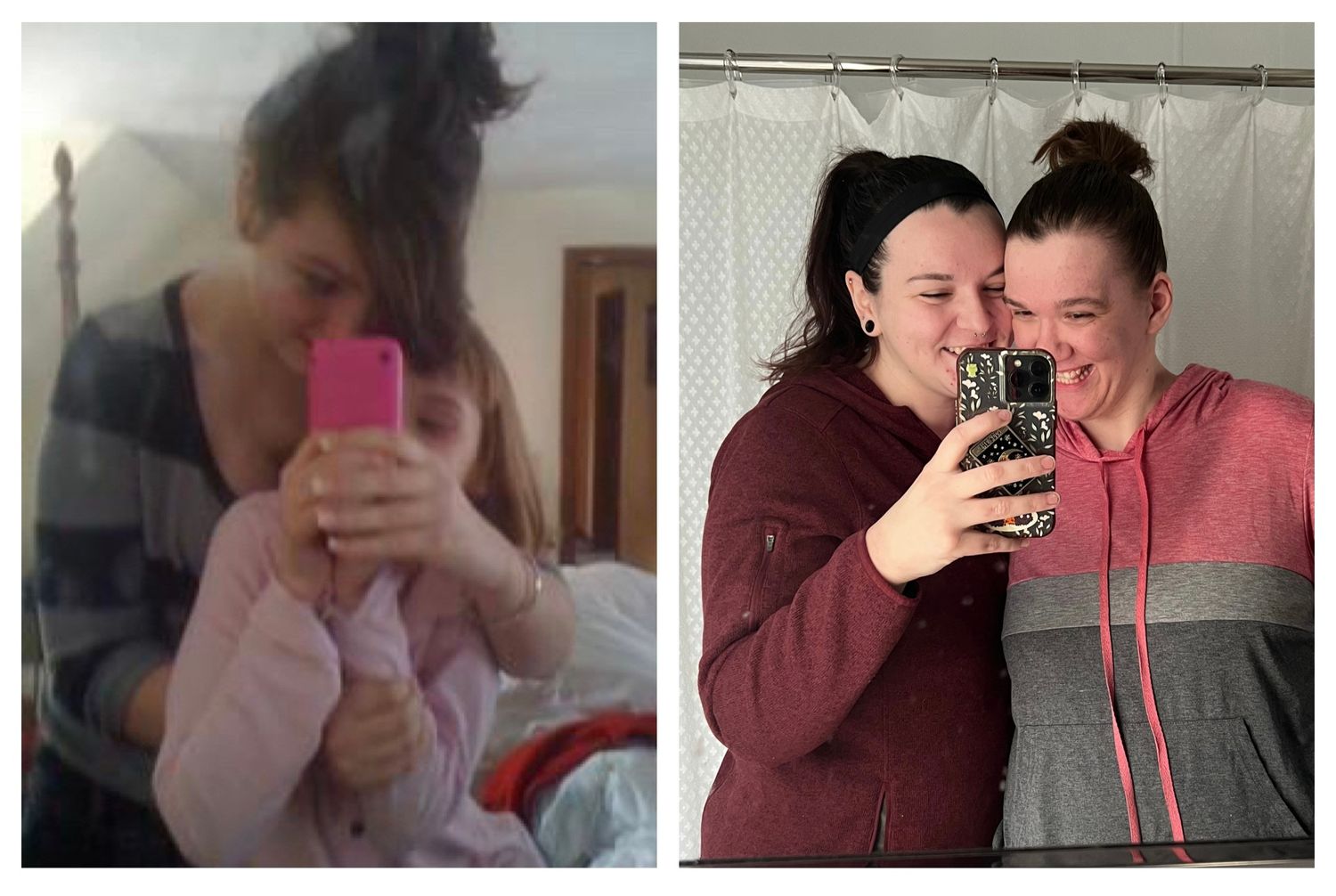
Recently I’ve been thinking back to the nights when we shared in our room as little girls, when she would quietly talk to herself as she tried to fall asleep. Her words were all blended together, more the “sound” a word makes but not the word itself, her tone lilted and singsongy. It drove me crazy sometimes, but I knew she couldn’t help it. Instead of getting frustrated with her, I would try to pretend that we were making up stories together, taking turns thinking of the next sentence, just like our mom used to do with our aunt when they were small.
Though I loved my sister just the way she was,
I wondered endlessly what it would be like if we could speak in the same language.
I just wanted to know what she was thinking,
what she was trying to say on those nights.
I wanted to know my sister beyond the walls
that we hadn't been able to take down yet.
Sometimes I would even let myself pretend, just for a second, that my sister would wake up in the morning and suddenly be like everyone else’s sister, like it was all a big joke that she kept secret for this long. I would pretend that when we woke up, she would borrow my favorite dress without asking, tell me about a mean girl on the playground, fight over the last Eggo waffle at breakfast. Sometimes it was fun to give in to the fantasy, even if just for a second, but I knew that reality would come with its own problems.
That sister was a sister I didn’t know if I would want to sign up for.
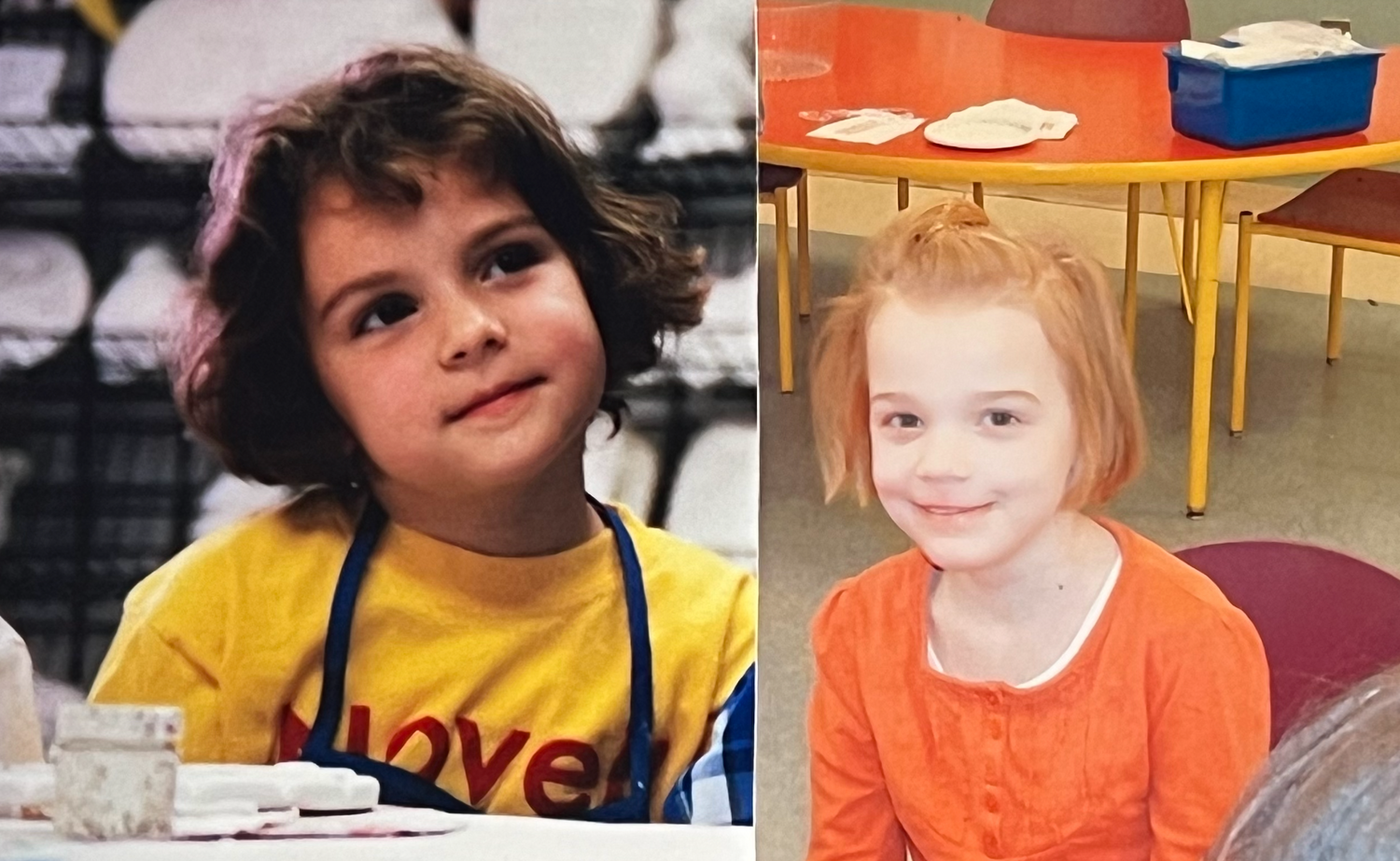
One night during a childhood summer spent visiting a distant cousin around my sister’s age, I remember my father asking me, just him and I in the car, if I ever wished that my sister was “like other little girls I knew”. It felt like he was asking me to tell him some kind of secret, but one that I didn’t have. I told him, a bit confused, that if she were anyone else, she wouldn’t be my sister. He was quiet after that, and I wondered if maybe he wasn’t expecting that answer. I couldn’t understand what other answer there would be.
There have been many bumps along the way, and the road is quite literally one that we have to pave on our own now, without parents or speech pathologists or teachers.
But tonight, the barrier lifted more than it ever has and we both felt it. It was like a fogged window had been wiped clean, and we could press our hands together on opposite sides of the glass, lining up the outlines of our fingertips. She is so hungry to learn everything she never knew she was allowed to understand: inflections, sarcasm, comedy, grammar, new words and expressions. She takes so much pride in finally being able to speak like she’s listened to people speak for her entire life. She is stubborn as hell, and more intelligent and adaptive than anyone I’ve ever met.
To exist in a confusing world that doesn’t understand you or welcome you is to constantly readjust yourself, which requires immensely special tenacity, creativity, and courage. When we pity or infantilize disabled folks, we disregard their entire identity and existence as human beings.
Just because they may not speak doesn’t mean they didn’t hear you.
Just because they struggle to make eye contact or use full sentences doesn’t mean they
don’t want to communicate.
Just because they may have trouble regulating doesn’t mean they don’t want to be involved.
Assume competence, involve all and evolve together. It is the ONLY way forward.
(Oh, and stream "Exploding Kittens" on Netflix. Grace and I both recommend it. )
